DONATE: #Bubby Is America's Charlie Gard, Help Him Get the Treatment Charlie Didn't

A couple whose son has the same debilitating condition as Charlie Gard shared their story on radio Tuesday.

Russell Cruzan II and Michelle Budnik-Nap in Kalamazoo, Michigan, had no idea that their baby Russell would be born with mitochondrial DNA depletion syndrome. In a one-in-a-million coincidence, both parents carry the same gene, and their baby had a very small chance of inheriting the gene from both of them.

“[Russell and Charlie] both have mitochondrial DNA depletion syndrome; it’s just different gene mutations causing it,” Budnik-Nap explained.

It first appeared Bubby's treatment would be covered by insurance but the parents had some disheartening news shortly after their interview on Tuesday.

DONATE HERE

"About an hour after our interview with you on Tuesday, we heard from our local hospital. They were the ones that were working on the prior authorization. They had received a denial from... Priority Health, stating that they will not cover the mito specialist in Boston, because she's a geneticist. And he sees a geneticist here. They don't understand that there's a difference between, you know, a mito specialist and a geneticist around here," Michelle said.

"Hold on. Guys, we are talking about $10,000 probably, maximum. This audience should be able to do that in the next ten minutes," Glenn said.

"Could you please go to YouCaring.com and just search for Bubby Cruzan. B-U-B-B-Y C-R-U-Z-A-N. It's #Bubby. Look for Bubby Cruzan. And if you can, $5 -- I mean, the people in this audience, just giving $5 at a time, we should be able to make a difference so this -- this couple can go get just an initial appointment to see if their baby can be helped so we can fight the other battle with -- what's the name of the health care company again?

DONATE HERE

GLENN: I mean, if you thought the country had gone mad a minute ago, wait until we play the audio of some woman who was told on an airplane, "Wow, nice dress." Oh, my gosh. Wait until you hear the rant and what this woman is saying and who this woman is, in just a second.

First, we want to bring you up to speed on a story we covered a couple of days ago. If you remember the parents of Bubby Cruzan -- Russell Cruzan, the baby that was born and has the same disease that Charlie Gard had. We had the parents on.

They're from Wisconsin, I believe. Or Michigan. And they were really happy and bubbly. And we asked them, how are things going? They said great things about their insurance company, which may change. Their insurance company, which was priority health, I believe.

And they said everything was being covered. And now it's not. We got to get this story. Bubby Cruzan's mother Michelle is on the phone. Also, dad Russell is on the phone. How are you guys doing?

RUSSELL: Pretty good, how about you?

MICHELLE: Good.

GLENN: Good. Tell me what happened. Because we were hearing good things about this insurance company two days ago.

MICHELLE: Well, about an hour after our interview with you on Tuesday, we heard from our local hospital. They were the ones that were working on the prior authorization. They had received a denial from -- from Boston -- or, not Boston's -- I'm sorry. Priority Health, stating that they will not cover the mito specialist in Boston, because she's a geneticist. And he sees a geneticist here. They don't understand that there's a difference between, you know, a mito specialist and a geneticist around here.

GLENN: Right. And the geneticist that you have there in Michigan is -- is saying that, no, I'm the wrong kind of specialist.

MICHELLE: Yep. Yep. They're obviously doing everything they can. But they don't really have experience with his condition.

GLENN: So now what are you guys going to do? Are you guys appealing this? What is the name of the insurance company again?

RUSSELL: Priority Health.

MICHELLE: Priority Health. You know, we're working on an appeal right now. And we're also working with Boston Children's Hospital to see if they will allow us to make the appointment right now without insurance approval and, you know, possibly end up having to pay out of pocket. We just want to do everything we can to get little Russell to a doctor that can help him.

GLENN: Well, here again, we are seeing, you know, insurance providers -- in England, it was the state. In America, it is -- I'm sorry. What is the name of the company again?

RUSSELL: Priority Health.

GLENN: Priority Health.

Here we're seeing -- Stu, will you just remind me of that, in case I forget again?

STU: I don't remember the name. What was the name again? I'm sorry.

RUSSELL: Priority Health.

STU: Priority Health. Got it.

GLENN: Priority Health. Here we're seeing a company that decides that they know better than the actual doctors do. That's weird. Because the state over in England were listening to the doctors. Here in a capitalist, free market system, a company like --

PAT: And who was the company?

GLENN: Priority Health. Priority Health.

RUSSELL: Priority Health. Priority Health.

GLENN: They think they know more than the doctors, which is interesting. Boy, that probably should be -- I wonder if they have a website or if they have a Facebook.

Jeffy, could you look up Priority Health. So if they have a Facebook page.

JEFFY: Priority Health.

GLENN: Oh, my gosh, they don't like it -- companies don't like when you start to tweet their name and say things like, "How could you do what the health care system did to Charlie Gard? Are we going to run the clock out on this child too?"

Do they have a Facebook page? Look it up. It's Priority Health. I'm sure you could find it and maybe tweet Priority Health on that and ask them how this is -- how this is good for the family.

You have a YouCaring page. If you search for Bubby. B-U-B-B-Y. YouCaring.com. Can we -- if listeners wanted to help, you know -- you know, give you guys money to be able to pay for it yourself, will the hospital take self-funded people?

MICHELLE: We're working on that right now. We believe that if we had the funds to it, which right now we don't have any idea how much it would cost. But we've heard that -- another person said they had a 25-minute appointment there that cost over $2,000. They put the figure around 2800. But we're hoping if we have the funds, you know, after our travel and everything, that we would be allowed to pay out of pocket.

GLENN: So wait a minute. So you're just trying to get enough money to buy the airline ticket and the first doctor's appointment?

MICHELLE: We're -- we're working on it, yeah. Thankfully, Miracle Flights reached out to us after your show. Thank you so much. And, you know, they might help with that. But we still have lodging costs. Obviously, food for when we're there. Any expenses related to --

GLENN: Okay. Okay. Okay. Hold on.

MICHELLE: Pay for the appointment.

GLENN: Hold on. Guys, we are talking about $10,000 probably, maximum. This audience should be able to do that in the next ten minutes.

Could -- could you please go to YouCaring.com and just search for Bubby Cruzan. B-U-B-B-Y C-R-U-Z-A-N. It's #Bubby. Look for Bubby Cruzan. And if you can, $5 -- I mean, the people in this audience, just giving $5 at a time, we should be able to make a difference so this -- this couple can go get just an initial appointment to see if their baby can be helped so we can fight the other battle with -- what's the name of the health care company again?

RUSSELL: It's Priority Health.

GLENN: Priority Health.

PAT: And it looks like Priority Health is on Facebook. And they also have LinkedIn.

JEFFY: Twitter, @Priority Health. Facebook.

PAT: They're all over the internet.

GLENN: Really?

PAT: Yeah.

RUSSELL: They're one of the largest ones in the company.

GLENN: Huh, and what's their Facebook page?

RUSSELL: They should have like the most money. And they just don't want to cough it up.

STU: I think to get the Facebook page, you just go to Facebook.com and search for "Priority Health."

GLENN: Priority Health. That's how you do it? Facebook.com.

And I know companies, they like to hear on their Facebook page and they like to see on Twitter, they like to see people, you know, point all of the wonderful things that they have done. Now, sometimes, companies don't like it when you point out the heartless things that they might be forgetting to do. But I'm sure they have just forgotten that they -- the business that they all, you know, dreamt about getting into when they were kids and they were on the playground. Some day, I'm going to be an actuary. Some day, I'm going to be an insurance agent for Priority Health. I'm sure they've just forgotten those dreams from the playground and forgotten that they're there to help heal people.

PAT: You would assume by the name, Priority Health, that health is a priority. Wouldn't you?

GLENN: You would. You would.

PAT: You would think that, but...

JEFFY: Hmm. They've got a feedback button on their website too.

GLENN: Do they really? Priority Health has that?

JEFFY: Sends them a secure email.

PAT: That's interesting.

GLENN: Let's say you had $5 and you could go to YouCaring.com and you could help this couple raise money so we don't, as a capitalist, free society, do exactly to these parents what England's health care system did just a few weeks ago. Let's -- let's show the world that that's not the way capitalism works. That that's not the way free people behave. Let's get them into an appointment. And let's say -- if you have time after that, you might go to Facebook and to Twitter and just tweet something to Priority Health in a very nice, reasoned way. Because I'm sure they just need to be remind that health is their priority.

Guys, thank you so much. Michelle, Russell.

RUSSELL: Thank you.

MICHELLE: Thank you, Glenn.

GLENN: We'll check in with you again. God bless.

STU: If you go to @worldofStu, by the way, on Twitter, I tweeted the -- and I'm sure @GlennBeck will have it tweeted as well, the link to the YouCaring page. So make sure you can actually find it. And if you wanted to find any of the social sites, if you search Google for "Priority Health," you will see --

GLENN: Is that the insurance company?

STU: That's the insurance company they were just talking about.

GLENN: Priority Health.

STU: Priority Health is the name of it.

GLENN: The one that they paid to give them -- give their health priority. And then the doctor said, "No, I'm a different kind of DNA specialist. I'm really not a geneticist that can do this kind of work." And so the hospital and the doctor said they should go to this particular specialist. And Priority Health said, "No. That person is good enough for you."

PAT: Hmm.

GLENN: Huh. I wonder how much Priority Health's -- boy, we should look into Priority Health because I bet they're not gouging people's eyes out as well. I bet they would love us to spend a day, several days, a freaking month going over what they do. Maybe I could take -- you know what, if Priority Health doesn't see the error of their ways, I'm going to dedicate Monday as an open phone day. And I will take the phone calls of all of the Priority Health customers that maybe feel their eyes are being gouged out. And we'll take those calls, and we'll let America know how much their health is a priority for Priority Health.

STU: Of course, we should give them the opportunity to do that.

GLENN: I know. I know. So I think they're going to find the error of their ways. I think they're going to be able to say, you know what, that's crazy. Because we misunderstood. It's not the same kind of doctor. And we don't know more than what the experts in the field know. And so we're going to -- we're going to make this a priority.

But in case --

STU: What, health?

GLENN: In case they would like some extra free publicity, I'm going to help them have all of the free publicity that I can possibly provide. And, you know, you always say, don't talk to the -- don't -- I don't want to talk to the salesman. I want to talk to the customers.

So if they're such a great insurance company, which I'm sure they are, they won't have any problem having customers call up and give them a free commercial all freaking Monday.

But I'm sure they're going to wake up.

Antifa isn’t “leaderless” — It’s an organized machine of violence

Jeff J Mitchell / Staff | Getty Images

The mob rises where men of courage fall silent. The lesson from Portland, Chicago, and other blue cities is simple: Appeasing radicals doesn’t buy peace — it only rents humiliation.

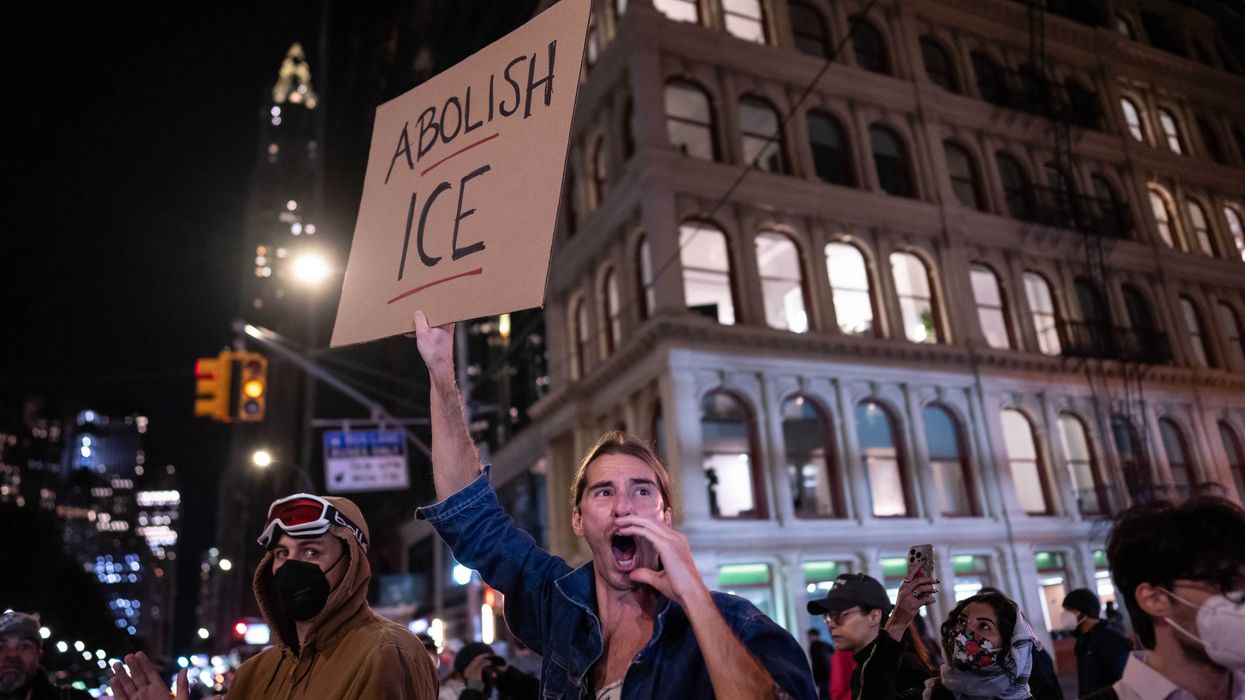
Parts of America, like Portland and Chicago, now resemble occupied territory. Progressive city governments have surrendered control to street militias, leaving citizens, journalists, and even federal officers to face violent anarchists without protection.

Take Portland, where Antifa has terrorized the city for more than 100 consecutive nights. Federal officers trying to keep order face nightly assaults while local officials do nothing. Independent journalists, such as Nick Sortor, have even been arrested for documenting the chaos. Sortor and Blaze News reporter Julio Rosas later testified at the White House about Antifa’s violence — testimony that corporate media outlets buried.

Antifa is organized, funded, and emboldened.

Chicago offers the same grim picture. Federal agents have been stalked, ambushed, and denied backup from local police while under siege from mobs. Calls for help went unanswered, putting lives in danger. This is more than disorder; it is open defiance of federal authority and a violation of the Constitution’s Supremacy Clause.

A history of violence

For years, the legacy media and left-wing think tanks have portrayed Antifa as “decentralized” and “leaderless.” The opposite is true. Antifa is organized, disciplined, and well-funded. Groups like Rose City Antifa in Oregon, the Elm Fork John Brown Gun Club in Texas, and Jane’s Revenge operate as coordinated street militias. Legal fronts such as the National Lawyers Guild provide protection, while crowdfunding networks and international supporters funnel money directly to the movement.

The claim that Antifa lacks structure is a convenient myth — one that’s cost Americans dearly.

History reminds us what happens when mobs go unchecked. The French Revolution, Weimar Germany, Mao’s Red Guards — every one began with chaos on the streets. But it wasn’t random. Today’s radicals follow the same playbook: Exploit disorder, intimidate opponents, and seize moral power while the state looks away.

Dismember the dragon

The Trump administration’s decision to designate Antifa a domestic terrorist organization was long overdue. The label finally acknowledged what citizens already knew: Antifa functions as a militant enterprise, recruiting and radicalizing youth for coordinated violence nationwide.

But naming the threat isn’t enough. The movement’s financiers, organizers, and enablers must also face justice. Every dollar that funds Antifa’s destruction should be traced, seized, and exposed.

AFP Contributor / Contributor | Getty Images

This fight transcends party lines. It’s not about left versus right; it’s about civilization versus anarchy. When politicians and judges excuse or ignore mob violence, they imperil the republic itself. Americans must reject silence and cowardice while street militias operate with impunity.

Antifa is organized, funded, and emboldened. The violence in Portland and Chicago is deliberate, not spontaneous. If America fails to confront it decisively, the price won’t just be broken cities — it will be the erosion of the republic itself.

This article originally appeared on TheBlaze.com.

Colorado counselor fights back after faith declared “illegal”

Drew Angerer / Staff | Getty Images

The state is effectively silencing professionals who dare speak truths about gender and sexuality, redefining faith-guided speech as illegal.

This week, free speech is once again on the line before the U.S. Supreme Court. At stake is whether Americans still have the right to talk about faith, morality, and truth in their private practice without the government’s permission.

The case comes out of Colorado, where lawmakers in 2019 passed a ban on what they call “conversion therapy.” The law prohibits licensed counselors from trying to change a minor’s gender identity or sexual orientation, including their behaviors or gender expression. The law specifically targets Christian counselors who serve clients attempting to overcome gender dysphoria and not fall prey to the transgender ideology.

The root of this case isn’t about therapy. It’s about erasing a worldview.

The law does include one convenient exception. Counselors are free to “assist” a person who wants to transition genders but not someone who wants to affirm their biological sex. In other words, you can help a child move in one direction — one that is in line with the state’s progressive ideology — but not the other.

Think about that for a moment. The state is saying that a counselor can’t even discuss changing behavior with a client. Isn’t that the whole point of counseling?

One‑sided freedom

Kaley Chiles, a licensed professional counselor in Colorado Springs, has been one of the victims of this blatant attack on the First Amendment. Chiles has dedicated her practice to helping clients dealing with addiction, trauma, sexuality struggles, and gender dysphoria. She’s also a Christian who serves patients seeking guidance rooted in biblical teaching.

Before 2019, she could counsel minors according to her faith. She could talk about biblical morality, identity, and the path to wholeness. When the state outlawed that speech, she stopped. She followed the law — and then she sued.

Her case, Chiles v. Salazar, is now before the Supreme Court. Justices heard oral arguments on Tuesday. The question: Is counseling a form of speech or merely a government‑regulated service?

If the court rules the wrong way, it won’t just silence therapists. It could muzzle pastors, teachers, parents — anyone who believes in truth grounded in something higher than the state.

Censored belief

I believe marriage between a man and a woman is ordained by God. I believe that family — mother, father, child — is central to His design for humanity.

I believe that men and women are created in God’s image, with divine purpose and eternal worth. Gender isn’t an accessory; it’s part of who we are.

I believe the command to “be fruitful and multiply” still stands, that the power to create life is sacred, and that it belongs within marriage between a man and a woman.

And I believe that when we abandon these principles — when we treat sex as recreation, when we dissolve families, when we forget our vows — society fractures.

Are those statements controversial now? Maybe. But if this case goes against Chiles, those statements and others could soon be illegal to say aloud in public.

Faith on trial

In Colorado today, a counselor cannot sit down with a 15‑year‑old who’s struggling with gender identity and say, “You were made in God’s image, and He does not make mistakes.” That is now considered hate speech.

That’s the “freedom” the modern left is offering — freedom to affirm, but never to question. Freedom to comply, but never to dissent. The same movement that claims to champion tolerance now demands silence from anyone who disagrees. The root of this case isn’t about therapy. It’s about erasing a worldview.

The real test

No matter what happens at the Supreme Court, we cannot stop speaking the truth. These beliefs aren’t political slogans. For me, they are the product of years of wrestling, searching, and learning through pain and grace what actually leads to peace. For us, they are the fundamental principles that lead to a flourishing life. We cannot balk at standing for truth.

Maybe that’s why God allows these moments — moments when believers are pushed to the wall. They force us to ask hard questions: What is true? What is worth standing for? What is worth dying for — and living for?

If we answer those questions honestly, we’ll find not just truth, but freedom.

The state doesn’t grant real freedom — and it certainly isn’t defined by Colorado legislators. Real freedom comes from God. And the day we forget that, the First Amendment will mean nothing at all.

This article originally appeared on TheBlaze.com.

Get ready for sparks to fly. For the first time in years, Glenn will come face-to-face with Megyn Kelly — and this time, he’s the one in the hot seat. On October 25, 2025, at Dickies Arena in Fort Worth, Texas, Glenn joins Megyn on her “Megyn Kelly Live Tour” for a no-holds-barred conversation that promises laughs, surprises, and maybe even a few uncomfortable questions.

What will happen when two of America’s sharpest voices collide under the spotlight? Will Glenn finally reveal the major announcement he’s been teasing on the radio for weeks? You’ll have to be there to find out.

This promises to be more than just an interview — it’s a live showdown packed with wit, honesty, and the kind of energy you can only feel if you are in the room. Tickets are selling fast, so don’t miss your chance to see Glenn like you’ve never seen him before.

Get your tickets NOW at www.MegynKelly.com before they’re gone!

What our response to Israel reveals about us

JOSEPH PREZIOSO / Contributor | Getty Images

I have been honored to receive the Defender of Israel Award from Prime Minister Netanyahu.

The Jerusalem Post recently named me one of the strongest Christian voices in support of Israel.

And yet, my support is not blind loyalty. It’s not a rubber stamp for any government or policy. I support Israel because I believe it is my duty — first as a Christian, but even if I weren’t a believer, I would still support her as a man of reason, morality, and common sense.

Because faith isn’t required to understand this: Israel’s existence is not just about one nation’s survival — it is about the survival of Western civilization itself.

It is a lone beacon of shared values in the Middle East. It is a bulwark standing against radical Islam — the same evil that seeks to dismantle our own nation from within.

And my support is not rooted in politics. It is rooted in something simpler and older than politics: a people’s moral and historical right to their homeland, and their right to live in peace.

Israel has that right — and the right to defend herself against those who openly, repeatedly vow her destruction.

Let’s make it personal: if someone told me again and again that they wanted to kill me and my entire family — and then acted on that threat — would I not defend myself? Wouldn’t you? If Hamas were Canada, and we were Israel, and they did to us what Hamas has done to them, there wouldn’t be a single building left standing north of our border. That’s not a question of morality.

That’s just the truth. All people — every people — have a God-given right to protect themselves. And Israel is doing exactly that.

My support for Israel’s right to finish the fight against Hamas comes after eighty years of rejected peace offers and failed two-state solutions. Hamas has never hidden its mission — the eradication of Israel. That’s not a political disagreement.

That’s not a land dispute. That is an annihilationist ideology. And while I do not believe this is America’s war to fight, I do believe — with every fiber of my being — that it is Israel’s right, and moral duty, to defend her people.

Criticism of military tactics is fair. That’s not antisemitism. But denying Israel’s right to exist, or excusing — even celebrating — the barbarity of Hamas? That’s something far darker.

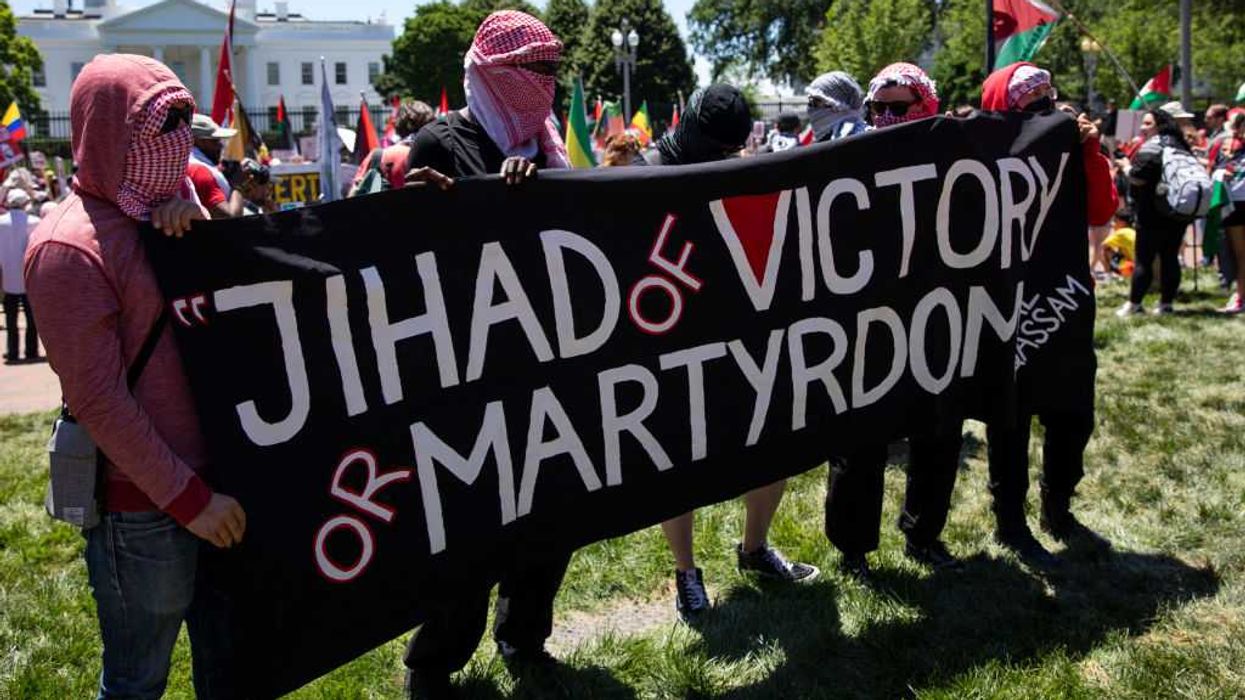
We saw it on October 7th — the face of evil itself. Women and children slaughtered. Babies burned alive. Innocent people raped and dragged through the streets. And now, to see our own fellow citizens march in defense of that evil… that is nothing short of a moral collapse.

If the chants in our streets were, “Hamas, return the hostages — Israel, stop the bombing,” we could have a conversation.

But that’s not what we hear.

What we hear is open sympathy for genocidal hatred. And that is a chasm — not just from decency, but from humanity itself. And here lies the danger: that same hatred is taking root here — in Dearborn, in London, in Paris — not as horror, but as heroism. If we are not vigilant, the enemy Israel faces today will be the enemy the free world faces tomorrow.

This isn’t about politics. It’s about truth. It’s about the courage to call evil by its name and to say “Never again” — and mean it.

And you don’t have to open a Bible to understand this. But if you do — if you are a believer — then this issue cuts even deeper. Because the question becomes: what did God promise, and does He keep His word?

He told Abraham, “I will bless those who bless you, and curse those who curse you.” He promised to make Abraham the father of many nations and to give him “the whole land of Canaan.” And though Abraham had other sons, God reaffirmed that promise through Isaac. And then again through Isaac’s son, Jacob — Israel — saying: “The land I gave to Abraham and Isaac I give to you and to your descendants after you.”

That’s an everlasting promise.

And from those descendants came a child — born in Bethlehem — who claimed to be the Savior of the world. Jesus never rejected His title as “son of David,” the great King of Israel.

He said plainly that He came “for the lost sheep of the house of Israel.” And when He returns, Scripture says He will return as “the Lion of the tribe of Judah.” And where do you think He will go? Back to His homeland — Israel.

Tamir Kalifa / Stringer | Getty Images

And what will He find when He gets there? His brothers — or his brothers’ enemies? Will the roads where He once walked be preserved? Or will they lie in rubble, as Gaza does today? If what He finds looks like the aftermath of October 7th, then tell me — what will be my defense as a Christian?

Some Christians argue that God’s promises to Israel have been transferred exclusively to the Church. I don’t believe that. But even if you do, then ask yourself this: if we’ve inherited the promises, do we not also inherit the land? Can we claim the birthright and then, like Esau, treat it as worthless when the world tries to steal it?

So, when terrorists come to slaughter Israelis simply for living in the land promised to Abraham, will we stand by? Or will we step forward — into the line of fire — and say,

“Take me instead”?

Because this is not just about Israel’s right to exist.

It’s about whether we still know the difference between good and evil.

It’s about whether we still have the courage to stand where God stands.

And if we cannot — if we will not — then maybe the question isn’t whether Israel will survive. Maybe the question is whether we will.